
Mastering Job Interviews: Your Ultimate Guide to Confidence and Success
Unlock the secrets to job interview preparation with this step-by-step guide. From crafting answers to asking smart questions, here’s how to impress every interviewer.
By: Javid Amin | 09 Aug 2025
Ace Your Next Job Interview with Proven Strategies and Expert Tips for a Stress-Free Experience
Job interviews can feel like stepping into a high-stakes spotlight. Your palms sweat, your heart races, and the pressure to impress can be overwhelming. But here’s the good news: with the right preparation, you can transform that nervous energy into confidence and land the job of your dreams. Whether you’re a fresh graduate or a seasoned professional, this comprehensive guide will walk you through every step of preparing for a job interview. From researching the company to mastering your mindset, we’ve got you covered with practical, actionable advice to help you shine. Let’s dive into how to ace your next job interview and turn stress into success.
Why Job Interview Preparation Matters
Job interviews are more than just a conversation—they’re your chance to showcase your skills, personality, and fit for the role. Preparation is the foundation of a successful interview. It helps you present yourself as a confident, capable candidate while reducing the anxiety that often comes with the process. According to a 2023 survey by LinkedIn, 87% of hiring managers say that candidates who demonstrate thorough preparation stand out significantly. By investing time in preparation, you’re not just readying yourself for questions—you’re building the mental resilience to handle any curveballs.
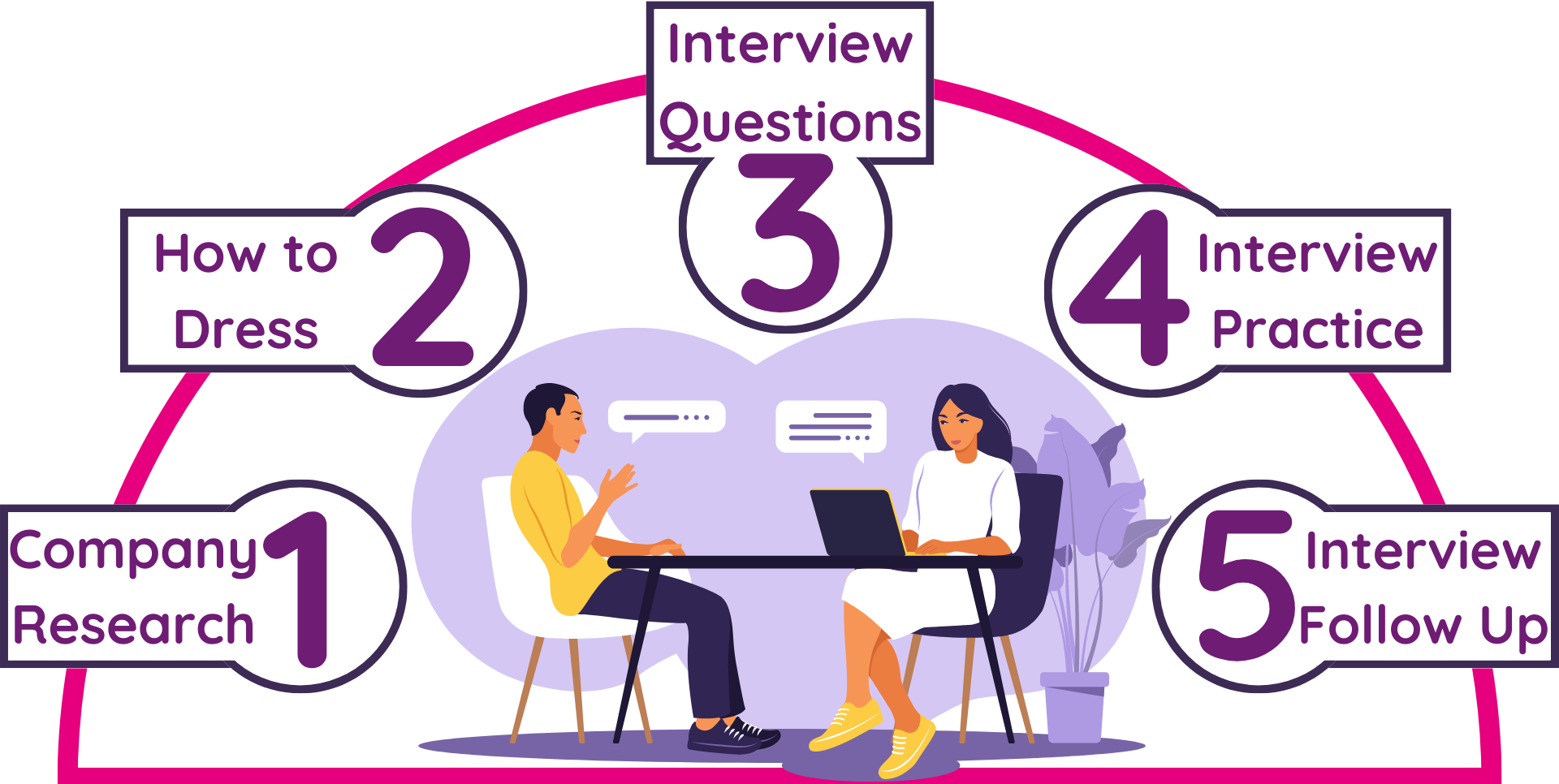
In this guide, we’ll break down the preparation process into seven key areas: researching the company, practicing common interview questions, mastering your resume, preparing thoughtful questions, conducting mock interviews, planning logistics, and cultivating a winning mindset. Each section is packed with tips, examples, and strategies to ensure you walk into your interview feeling ready to impress.
01. Research the Company: Know Your Audience
Walking into an interview without knowing about the company is like showing up to a party without knowing the host. Researching the organization not only helps you tailor your answers but also shows the interviewer you’re genuinely interested. Here’s how to do it effectively.
Understand the Company’s Mission and Values
Start by visiting the company’s official website. Look for their mission statement, vision, and core values. These are often found in the “About Us” or “Our Story” sections. For example, if you’re interviewing with a company like Patagonia, you’ll find their mission is heavily focused on environmental sustainability. Tailor your responses to highlight your alignment with these values—perhaps by sharing a story about your volunteer work with a local conservation group.
Dive into Their Products and Services
Familiarize yourself with what the company does. If it’s a tech company like Google, explore their product offerings, from Google Cloud to Pixel devices. If it’s a retail brand like Nike, understand their latest campaigns or product lines. This knowledge allows you to speak confidently about how your skills can contribute to their success. For instance, if applying for a marketing role, you might say, “I noticed Nike’s recent ‘Just Do It’ campaign emphasized inclusivity, and I’d love to bring my experience in diverse audience targeting to amplify that message.”
Check Recent News and Updates
Search for recent articles or press releases about the company. Use Google News or check their social media profiles on platforms like X for real-time updates. Has the company launched a new product, expanded to a new market, or faced challenges? Knowing this helps you address relevant topics. For example, if a company recently acquired a competitor, you could ask, “How has the recent acquisition impacted your team’s priorities?” This shows you’re informed and engaged.
Understand the Company Culture
Company culture is a big deal—it’s the vibe of the workplace and how employees interact. Check sites like Glassdoor or Indeed for employee reviews to get a sense of the work environment. Are they collaborative, innovative, or fast-paced? If you’re interviewing with a startup, for instance, you might highlight your adaptability and entrepreneurial spirit. On X, search for posts mentioning the company to see what employees or customers are saying. Just be cautious—cross-check information for accuracy, as social media can sometimes amplify rumors.
Know the Industry Landscape
Context matters. Research the company’s industry to understand its competitors, challenges, and trends. For example, if you’re interviewing with a fintech company like Square, read up on trends in digital payments or regulations affecting the sector. This allows you to speak strategically, like saying, “With the rise of contactless payments, I see an opportunity to enhance Square’s user experience through intuitive app design.”
Pro Tip: Create a one-page “cheat sheet” summarizing the company’s mission, products, recent news, and competitors. Review it before the interview to keep key points fresh.
02. Practice Common Interview Questions: Be Ready for Anything
Interviews often follow a predictable pattern, with questions designed to assess your skills, experience, and fit. Practicing these questions helps you articulate your thoughts clearly and confidently.
The Classic: “Tell Me About Yourself”
This is often the first question, and it’s your chance to set the tone. Craft a concise, compelling story that covers your background, key achievements, and why you’re excited about the role. For example:
“I’m a marketing professional with five years of experience in digital campaigns, specializing in SEO and content strategy. At my last role with XYZ Corp, I increased website traffic by 30% through targeted campaigns. I’m passionate about data-driven marketing and thrilled about the opportunity to contribute to your innovative brand.”
Keep it to 1-2 minutes and tailor it to the job.
Behavioral Questions: Use the STAR Method
Behavioral questions like “Tell me about a time you faced a challenge” or “How do you handle conflict?” are designed to see how you’ve performed in real-world scenarios. Use the STAR method to structure your answers:
-
Situation: Set the scene (e.g., “At my previous job, our team missed a critical deadline.”)
-
Task: Explain your role (e.g., “As the project lead, I was responsible for getting us back on track.”)
-
Action: Detail what you did (e.g., “I reorganized the workflow and negotiated extended deadlines with stakeholders.”)
-
Result: Share the outcome (e.g., “We delivered the project on time and improved team efficiency by 15%.”)
Practice 5-10 STAR stories covering teamwork, leadership, problem-solving, and adaptability. These can be adapted to fit multiple questions.
Strengths and Weaknesses
For strengths, choose qualities relevant to the job and back them up with examples. For instance, “My strength is strategic thinking—I developed a campaign that boosted engagement by 25%.” For weaknesses, pick something genuine but not deal-breaking, and show how you’re improving. Example: “I used to struggle with public speaking, but I’ve been taking Toastmasters classes, and now I confidently present to large groups.”
The “Why” Questions
Questions like “Why do you want this job?” or “Why this company?” test your motivation. Be specific. Instead of saying, “I want to grow,” say, “I’m excited about this role because it combines my passion for data analysis with your company’s focus on cutting-edge AI solutions, like your recent AI-driven customer insights tool.”
Tricky Questions
Prepare for curveballs like “Where do you see yourself in five years?” or “What’s your biggest failure?” For the former, focus on growth within the company: “I hope to grow into a leadership role within your marketing team, driving innovative campaigns.” For failures, share a lesson learned: “I once underestimated a project’s timeline, but it taught me to build in buffers, and I’ve since delivered every project on time.”
Pro Tip: Record yourself answering questions to spot filler words (like “um” or “you know”) and refine your delivery. Aim for clear, concise responses.
03. Know Your Resume: Own Your Story
Your resume is the roadmap of your interview. Interviewers will ask about your experiences, so be ready to dive deep into every bullet point.
Highlight Relevant Achievements
Review your resume and identify 3-5 accomplishments that align with the job. For example, if the role requires project management, be ready to discuss a project you led, including specifics like budget, timeline, and outcomes. Quantify results where possible: “I reduced onboarding time by 20% by streamlining processes.”
Bridge Gaps or Transitions
If you have employment gaps or career changes, prepare a positive explanation. For example, “I took a year off to care for a family member, during which I completed an online course in data analytics to stay sharp.” This shows initiative and resilience.
Tailor Your Narrative
Customize your resume’s story to the job. If you’re applying for a sales role but have a mixed background, emphasize sales-related achievements, even from non-sales roles. For instance, “In my customer service role, I upsold products to 15% of callers, contributing to a $50,000 revenue increase.”
Pro Tip: Bring printed copies of your resume to in-person interviews, even if they have it digitally. It shows preparedness and gives you something to reference.
04. Prepare Thoughtful Questions: Show Your Curiosity
Asking questions demonstrates interest and helps you assess if the job is a good fit. Avoid generic questions like “What’s the company about?” Instead, ask specific, insightful ones:
-
“What does success look like in this role after the first six months?”
-
“How does the team collaborate on cross-functional projects?”
-
“What are the biggest challenges the department is facing right now?”
-
“How does the company support professional development, like training or mentorship?”
These questions show you’re thinking about your impact and the company’s future. If you researched recent news, tie it in: “I read about your new product launch—how will this role contribute to its success?”
Pro Tip: Prepare 5-7 questions, as some may be answered during the interview. Write them down to avoid forgetting in the moment.
05. Conduct Mock Interviews: Practice Makes Perfect
Mock interviews simulate the real thing, helping you refine your delivery and build confidence. Here’s how to make them effective.
Partner with a Friend or Mentor
Ask someone you trust to play the interviewer. Provide them with a list of common questions and the job description. Ask for honest feedback on your answers, body language, and tone. For example, they might notice if you fidget or speak too quickly.
Use Online Tools
Platforms like Pramp or Interviewing.io offer free or low-cost mock interviews with peers or professionals. Some even provide AI-driven feedback. These tools are great for practicing under pressure and getting unbiased critiques.
Simulate the Environment
If it’s a virtual interview, practice using the same platform (e.g., Zoom or Teams) to test your setup. For in-person interviews, practice in a formal setting, like a quiet room, to mimic the vibe. Dress in your interview outfit to get comfortable.
Handle Tough Scenarios
Ask your mock interviewer to throw in curveballs, like “Why should we hire you over others?” or “Can you explain this resume gap?” This prepares you for unexpected questions.
Pro Tip: Record your mock interviews to review your performance. Look for eye contact, posture, and clarity of speech.
06. Plan Logistics: Eliminate Last-Minute Stress
Logistical mishaps can derail your confidence, so plan ahead to ensure a smooth experience.
Confirm the Details
Double-check the interview time, location, or virtual link. Account for time zones if it’s remote. If in-person, map out the route, factoring in traffic or public transit delays. Aim to arrive 10-15 minutes early.
Test Your Tech
For virtual interviews, test your internet, camera, and microphone a day before. Ensure your background is clean and professional. Have a backup plan, like a hotspot or phone, in case of tech issues.
Prepare Your Materials
Pack a notepad, pen, and copies of your resume, references, or portfolio. For virtual interviews, have digital versions ready to share. If the role requires a presentation, practice it thoroughly and have it loaded on a USB or cloud drive.
Dress the Part
Choose professional attire that matches the company culture. For corporate roles, a suit or blazer is safe. For creative or tech roles, business casual might suffice—check Glassdoor or X for clues about the dress code. Lay out your outfit the night before.
Pro Tip: Create a checklist of everything you need (e.g., ID, charger, directions) and review it the day before to avoid forgetting anything.
07. Cultivate a Winning Mindset: Confidence is Key
Your mindset can make or break your interview. Here’s how to walk in feeling calm and capable.
Visualize Success
Spend a few minutes visualizing a successful interview. Picture yourself answering questions confidently, connecting with the interviewer, and leaving a great impression. Studies show visualization reduces anxiety and boosts performance.
Practice Relaxation Techniques
Deep breathing, meditation, or progressive muscle relaxation can calm nerves. Try the 4-7-8 breathing technique: inhale for 4 seconds, hold for 7, exhale for 8. Do this for a minute before the interview to center yourself.
Reframe Nerves as Excitement
Nervousness and excitement feel similar—racing heart, sweaty palms. Tell yourself, “I’m excited to share my skills!” This mental shift, backed by research from Harvard, can turn anxiety into positive energy.
Affirm Your Worth
Remind yourself of your qualifications. Write down three reasons you’re a great fit for the role and review them before the interview. For example, “I have the experience, I’m passionate about the industry, and I’m a quick learner.”
Pro Tip: Avoid over-caffeinating before the interview, as it can amplify jitters. Opt for water or a light snack to stay focused.
Bonus Tips for Standing Out
-
Follow Up: Send a thank-you email within 24 hours, reiterating your interest and referencing a specific moment from the interview. Example: “I enjoyed discussing your team’s approach to AI-driven analytics—it’s exactly the kind of challenge I’m excited to tackle.”
-
Body Language: Maintain eye contact, smile, and sit up straight. A firm handshake (if in-person) sets a confident tone.
-
Stay Authentic: Be yourself, not a rehearsed robot. Share genuine stories and let your personality shine.
Common Pitfalls to Avoid
-
Over-Rehearsing: Memorizing answers can make you sound robotic. Focus on key points and let your natural voice come through.
-
Negativity: Never badmouth a previous employer or colleague—it reflects poorly on you.
-
Lack of Specificity: Vague answers like “I’m a hard worker” don’t impress. Use examples and data to back up claims.
-
Ignoring Non-Verbal Cues: If the interviewer seems disengaged, adjust your pace or ask a question to re-engage them.
Tailoring Your Prep for Different Interview Types
Virtual Interviews
-
Ensure a quiet, well-lit space.
-
Look at the camera, not the screen, for better eye contact.
-
Have a cheat sheet off-screen for quick reference.
Panel Interviews
-
Address all panel members, not just the lead interviewer.
-
Note their names and roles to personalize your answers.
-
Stay calm under multiple questions—pause and think before responding.
Technical Interviews
-
Practice coding or problem-solving on platforms like LeetCode or HackerRank.
-
Explain your thought process clearly, even if you don’t solve the problem perfectly.
-
Review the job’s technical requirements and brush up on relevant skills.
Behavioral Interviews
-
Focus on STAR stories that showcase soft skills like communication and leadership.
-
Be ready to adapt stories to different questions.
-
Show self-awareness and a growth mindset.
Resources to Boost Your Prep
-
Books: Cracking the Coding Interview by Gayle LaMcDowell for tech roles, or Knock ’em Dead Job Interview by Martin Yate for general prep.
-
Online Courses: Platforms like Coursera or Udemy offer interview skills courses.
-
X Platform: Search for posts with hashtags like #JobInterviewTips or #CareerAdvice for real-time insights from professionals.
-
Career Coaches: Consider a session with a coach for personalized feedback.
Bottom-Line: Turn Stress into Success
Job interviews don’t have to be daunting. With thorough preparation, you can walk in feeling confident, capable, and ready to shine. Research the company to show your interest, practice answers to build fluency, know your resume to own your story, ask thoughtful questions to stand out, run mock interviews to polish your delivery, plan logistics to avoid stress, and cultivate a mindset that radiates confidence. Each step builds on the last, creating a solid foundation for success.
The next time you’re invited to an interview, see it as an opportunity—not a hurdle. You’ve got the skills, the passion, and now the tools to ace it. So, take a deep breath, prep like a pro, and go land that job!
Ready to take it further? If you have a specific job description, company name, or interview type in mind, share it, and I can tailor a prep plan just for you—complete with sample answers or questions. Let’s make your next interview your best yet!